

This month, 22 British scientists published a study intended to ease parents’ minds about the risks of the COVID-19 vaccine, and scare them about the dangers of getting the virus. But the study model was flawed because it asked the wrong question. And the authors buried evidence showing that the vaccine risk outweighed the virus risk in the appendix, while stating the opposite in their widely publicized summary.
Readers of my blog are familiar with the fact that the COVID-19 mRNA shots pose a risk of myocarditis, especially in children. But they may not know that myocarditis is usually permanently disabling, and in adults, it is often fatal within five years.
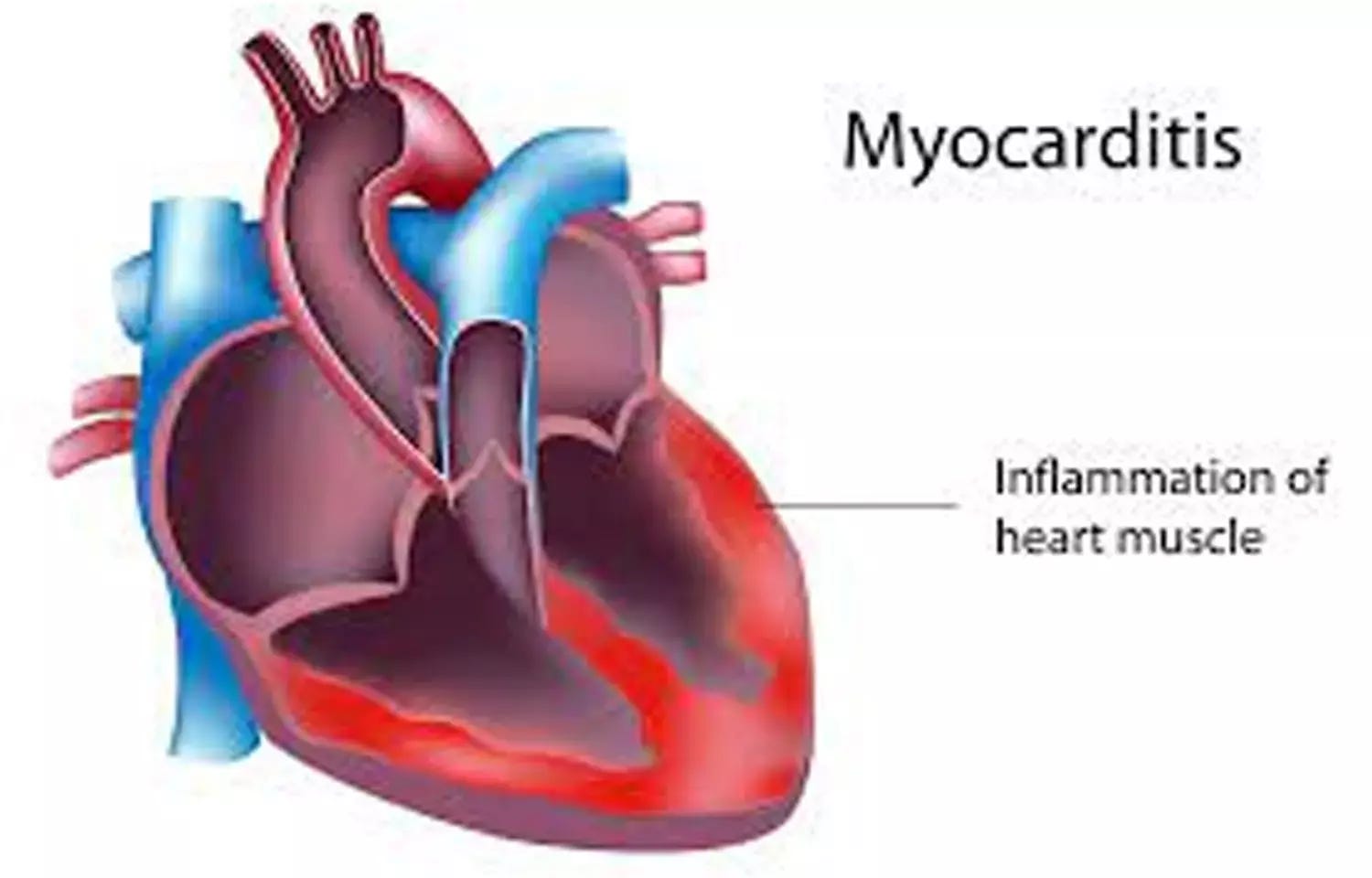
Tragically, we are now also learning what the trajectory of myocarditis in vaccinated children actually looks like.
This has been a public relations setback for industry and governments that have been advocating, and sometimes mandating, that children as young as 6 months get the vaccines — even though COVID-19 is almost always mild or symptom-free in young people.
This month, 22 British scientists from prestigious universities published a study intended to ease parents’ minds about risks of the vaccine, and simultaneously scare them about the dangers of getting COVID-19.
The message is that yes, there are rare cases — they always use the word “rare” — in which children get myocarditis after vaccination, but hey, no product can be perfect. And it’s better to risk the vaccine than risk getting COVID-19. Also, they claim, kids are more likely to get myocarditis if they get the virus than they are to get myocarditis from the vaccine.
That’s the message — and the authors and publisher have the clout to widely broadcast that message in a press release and in news headlines in Britain and America.
But what does the study actually say? In short, it asks the wrong question — and even so, the answer they get must be buried in the appendix, because it’s inconsistent with the message they want to promote.
Article summary omitted evidence of vaccine risk
The study design is deeply compromised because the 22 authors constructed a complicated model to avoid doing a straightforward comparison (vaccine only versus disease only).
And even after they cooked the books, even after they took data from almost 14 million children and teens under age 18 in England, they got a result that is barely statistically significant, with overlapping error bars for the risk from COVID-19 and the risk from vaccination.
It gets worse. The results, which marginally favored the vaccination, were trumpeted in a summary at the top of the paper and announced to the press.
But buried in the appendix, published separately online, is a table that shows a more relevant version of the comparison.
The version in the summary is from an early time frame when the vaccine was not available. The appendix shows comparable data for the time frame in which the vaccine was available, limited to the ages for which the vaccine was offered.
In the appendix, the risk of myocarditis from the disease is half that of the risk from the vaccine. This blatantly contradicts the summary and the headlines generated by the article — and it sure looks like they compared the same time period first, didn’t like the result, and then substituted different time periods for the vaccine and the virus because that was the result they wanted to get, the result that their employers and their government sponsors hired them to get.
And still, this was a response to the deceptive version of the question, not the more straightforward one that the researchers chose not to answer.
Study authors asked the wrong question
The most pertinent question is the simple one: Did vaccinated children have a higher incidence of myocarditis than unvaccinated children?
This is an easy question to answer, given the data that these authors (but not the public) had access to. In a few minutes, they could have calculated a rate of myocarditis among vaccinated and unvaccinated children.
However, if they did the calculation, they didn’t report the results. My guess is that they did the calculation, didn’t like what they saw, so they didn’t include it in the published article.
What I mean by “asking the wrong question” is that the article compares the risk of myocarditis from COVID to the risk from vaccination. But this is not the most relevant question. Why?
Because many people got the vaccine and then got COVID anyway, so they were unnecessarily exposed to both risks. Conversely, many children who didn’t get the vaccine, didn’t get COVID. Or, they get such a mild case that they don’t even notice it, and critically, they never got a medical diagnosis. The study limited consideration to those cases that were diagnosed in a hospital, the tiny minority of serious COVID cases among children. But the great majority of unvaccinated children never got a diagnosed case of COVID, never got myocarditis because they avoided both risks.
This is why comparing the risk of myocarditis from COVID to the risk from the COVID vaccine is not really the pertinent question. It’s not a question of “either or.”
Authors muddied the waters with the way they treated kids who got vaccine AND the virus
The message the authors wanted to imply was that, even though the vaccine increased the risk of myocarditis, it decreased the risk of COVID — and since COVID itself can cause myocarditis, the total risk is actually lower with vaccination than without.
If that is their claim, it’s easy to determine if it is true. The simplest calculation they could have done with the data available to them was also the calculation most pertinent to what parents want to know: Is my child better off with or without the vaccine?
The authors chose not to offer us the simple answer to that straightforward question.
But — given that they asked the wrong question — they might have derived a clean answer just by comparing the subset of children who were vaccinated but never got COVID to the subset who got COVID but were never vaccinated.
Because the study included data spanning two years from all over the U.K., there were hundreds of thousands of children in these subcategories — more than enough to do a clean statistical comparison.
But again, the authors chose not to do this. Or, my guess, they did the comparison and didn’t like the result, so they didn’t include it in the publication.
Instead, the authors analyzed myocarditis in the large group of children who got both the vaccine and the disease. This muddied the waters because there is no clear way to determine whether it was the disease or the vaccine that damaged the child’s heart.
This gave them the excuse to introduce a computational model. The devil is in the model. Computational modeling can be done in a genuine attempt to test a hypothesis about how nature works; but modeling can also be a way that researchers slip in their own assumptions that they don’t have to explain to the public.
It was in the computational model that the authors surreptitiously assume that in those children who were vaccinated and later got COVID, the myocarditis was due to the disease and not the vaccination. They can make that assumption appear reasonable because the disease came later, so it might seem closer to the proximate cause of the myocarditis.
The question they are skirting is the comparison between vaccinated and unvaccinated children who get a case of COVID. Which group has a higher risk of myocarditis?
The possibility that seems likely is that children who got COVID after the vaccination had the highest heart risk of all. Of course, there is the logical possibility that children who got COVID after vaccination had a milder case, with a lower risk of myocarditis.
However, if that had been the result, I would think the authors would not only have included that result, but also headlined it.
One more thing — the study looked only at the Pfizer vaccine. Myocarditis risk from the Moderna vaccine is estimated to be three times higher than Pfizer. They had the Moderna data and chose not to look at it.
Or they looked at it, decided they didn’t like what they saw, and decided not to report it.
‘This is public relations masquerading as science’
So, to summarize:
The authors asked a complicated question when a simple one was more relevant.
Given this wrong question, they did not do the most straightforward analysis to answer it.
Even so, they found that the vaccine held almost twice the risk of myocarditis compared to the disease. This result was only in Table S16 of the Supplementary Appendix — but mentioned nowhere in the body of the paper, let alone in the summary at the top.
And still they made prominent announcements to the public, claiming that their study confirms that children are better off with the vaccine than without.
This is public relations masquerading as science. For an article like this to be peer reviewed and featured prominently in Britain’s most prestigious medical journal tells us just how deeply the ecosystem of medical research has been corrupted.
And this is the “science” that our U.S. Food and Drug Administration relies on when they approve dangerous vaccines for healthy children who are at almost no risk from the disease itself.
In most statistical articles, the raw data used for a study are published online and linked in an appendix to the article. However, in this case, the U.K. National Health Service (NHS) granted access to the data exclusively to this prestigious group of scientists.
Personally, I would like to see the raw data and perform the analysis that the 22 scientists should have done from the beginning. Children’s Health Defense is in the process of requesting access from the NHS. Stay tuned …
It doesn't take 22 PhDs to compare the percentage of unvaccinated and vaccinated children who got myocarditis. This is what they should have done within the first 15 minutes that they had the government data.
It takes 22 PhDs to concoct a model that tells a story so far from the truth, and to hide behind each other's reputations so no one has to take the blame when the study turns out to be a sham.
Very good review and relevant criticism to expose the biases of these pseudo-scientists. Well done!
« This is public relations masquerading as science (…that) tells us just how deeply the ecosystem of medical research has been corrupted. »