
What happened to the data?
Governments are sitting on the data that could settle vaccine controversies.

Do vaccines cause more harm than good? Or is there an overwhelming net benefit? Are there some vaccines in each category? Are whole-virus vaccines better than vaccines based on a single antigen (“epitope”) isolated from the virus? Are vaccines more effective against viruses than bacteria, or vice versa? Do mRNA “vaccines” work at all?
All these questions would be easy to answer if only government data were released to the public. But these data are locked up. Our CDC, British National Health Service, and corresponding health bureaucracies in European countries (and even Japan) have changed their policies since COVID, and the data that would normally be in the public domain has been purloined, or analyzed only by trusted insiders.
Many millions of children have been vaccinated and have grown to adulthood. Several more millions have been unvaccinated or partially vaccinated. The CDC has extensive health data by vaccination status. So do several of the larger HMO networks.
But these data have been unavailable to the public or to the community of university researchers in public health. Occasionally, an article has come out from the MMWR, a weekly in-house journal of the CDC, written by scientists but without peer review and without the requirement, now almost universal among medical journal editors, that the authors of any statistical study make their raw data available to other researchers. For example, last month I picked apart a Lancet article by the CVD-COVID-UK Consortium, a group of elite British researchers who had been given exclusive access to children’s health data collated with their vaccination status.
The unavailability of data has aroused suspicion — what are they hiding? Sometimes the CDC spokesmen offer “patient privacy” as an excuse, and that just makes us more suspicious. It is standard practice to “de-identify” data, substituting a number or unique identifier for each patient’s name. Privacy is a non-issue.
The plot thickens
The world’s most famous critic of vaccination policies, Robert Kennedy Jr last year was appointed to head the entire Health and Human Services bureaucracy, parent organization of the CDC. We expected that if there were secrets embedded in the CDC data archives, we would know where the bodies are buried. Surely Kennedy would be motivated to release the data.
But we’re at the one-year mark of Kennedy’s tenure, and still we haven’t seen the data. Personally, I don’t have any contacts within Kennedy’s HHS, but I know several people who do. So I ask them, why haven’t we seen the data dump that could resolve once and for all the questions about vaccine safety?
I haven’t heard a good answer. Is Kennedy in on the scam? From the day after the 2024 election, he claimed he was looking to release vaccination data to the public.
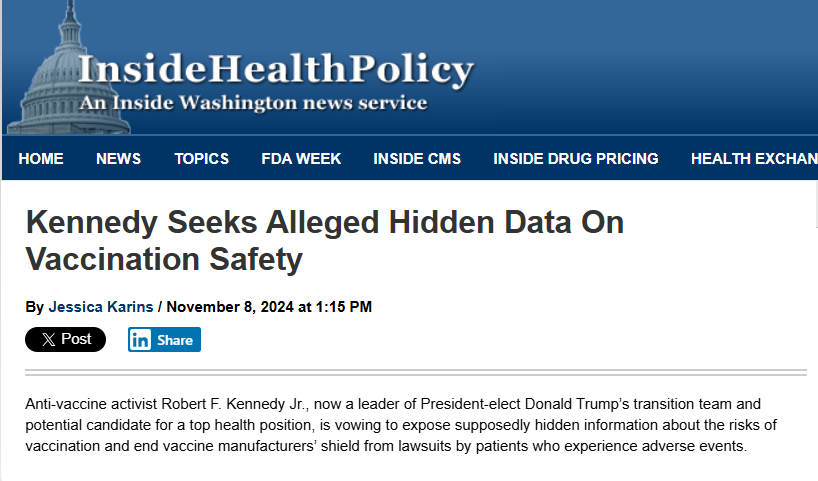
After his appointment, Kennedy talked about “radical transparency”
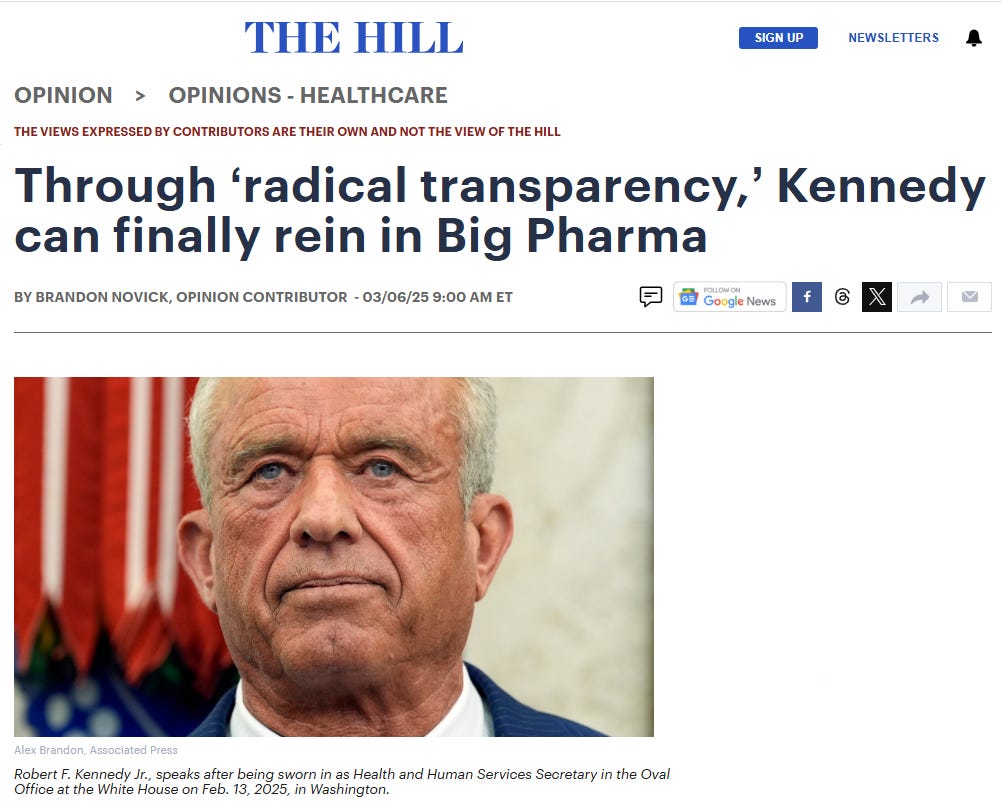
But within a month, he was worried that despite his position, he didn’t really have control of the agency.
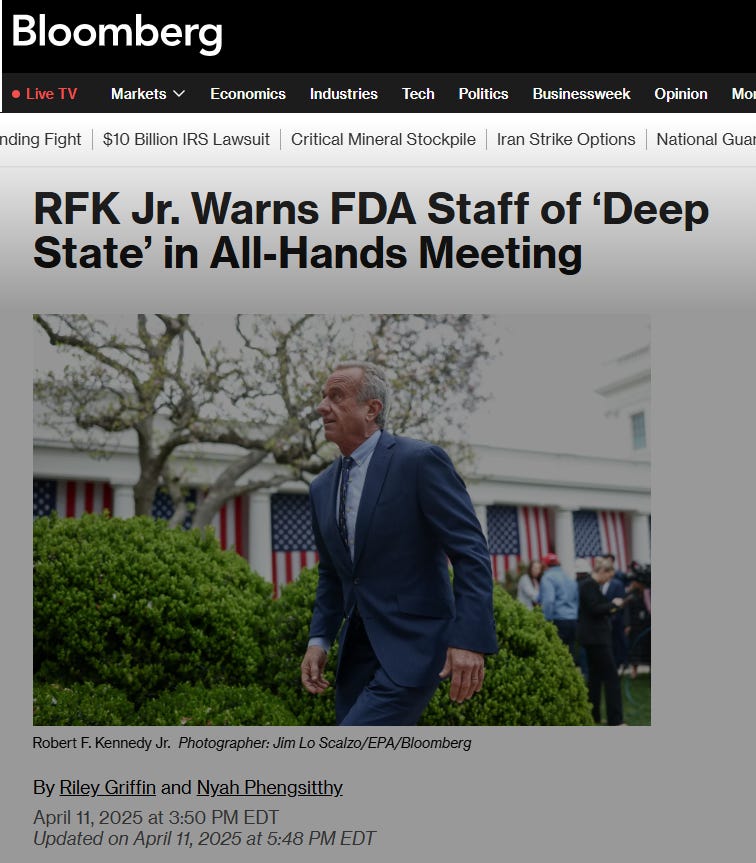
Could it be that he’s trying to get the data, but the career employees working under him at CDC are insubordinate, refusing to give access to their boss? Is it possible that the data have been erased, or “taken home”?
WASHINGTON (AP) — Shortly before he was forced to resign, the nation’s top vaccine regulator [Peter Marks] says he refused to grant Health Secretary Robert F. Kennedy Jr.’s team unrestricted access to a tightly held vaccine safety database, fearing that the information might be manipulated or even deleted. [Associated Press, Apr 7 2025]
Can you make sense of this? When you’re afraid that a database might be deleted or corrupted, the obvious thing to do is to reveal it to the public. What Marks did instead was to erase the data from the CDC server and … ?? The article does not say what he did with it.
The Government Accountability Office was once an honest broker, rising above partisan disputes to offer unedited data to the public. But last fall, assistant director Steven Putansu was caught on hidden camera by James O’Keefe (formerly of Project Veritas), describing his agency’s plot to keep critical health data out of Kennedy’s hands. [Write-up by Meryl Nass] [O’Keefe on X] Putansu gave the same nonsensical reasoning as Peter Marks: He only erased the data to make sure that Kennedy couldn’t erase it.
Precedent
In case you are unfamiliar with this story: In 2004, the CDC published a study purporting to find no link between MMR vaccinations and autism. Later, Brian Hooker, an epidemiologist and parent of an autistic son, gained the confidence of the study’s senior author, William Thompson, and in a series of phone calls, Thompson confessed that the data presented to him showed a significant connection between MMR and autism, but that he had been pressured by supervisors to dice and slice the data until he found a subset for which he could claim that the association was “not statistically significant”. [read the whole story]
There’s another story of interest: In 2021, James Lyons-Weiler worked with a Portland pediatrician named Paul Thomas. Doctor Paul had been meticulous about informed consent, going over vaccine risks and benefits with each parent before each vaccination. As a result, he had a diverse patient population, some fully vaccinated, some who had had no vaccines, and everything in between. Together, Lyons-Weiler and Thomas looked for correlations between vaccination status and health outcomes. They wrote up the results and published them in a journal. The push-back was immediate. Within weeks, the Oregon Medical Board rescinded Thomas’s license to practice. For a year, interested parties pressured the journal until the article was retracted, no reason offered.
This is the kind of study that would tell us what we want to know about the benefits of vaccination vs the costs. Some powerful people don’t want such studies to be done. More stories are in this book.
Vaccine Safety Datalink
VSD is a project of CDC, created in 1990. The idea is solid enough: The largest HMOs in the country each collect full health records for millions of patients. Coded within these records are statistical associations between drugs and outcomes, vaccines in particular. If these data were made available to researchers, they would answer all our questions.
VSD data have never been available to the public, but only to select CDC researchers who report on them selectively, without peer review or data transparency.
Cancer data — no smoking gun
There have been persistent anecdotes connecting the mRNA shots to cancer. I know too many people who got cancer after vaccination, and perhaps you do, too. There are plausible mechanisms, including chronic inflammation and depression of immune surveillance. Articles have been written about secondary data that point in this direction. The Ethical Skeptic wrote a series of tweets last year, inferring cancer rates from economic data.
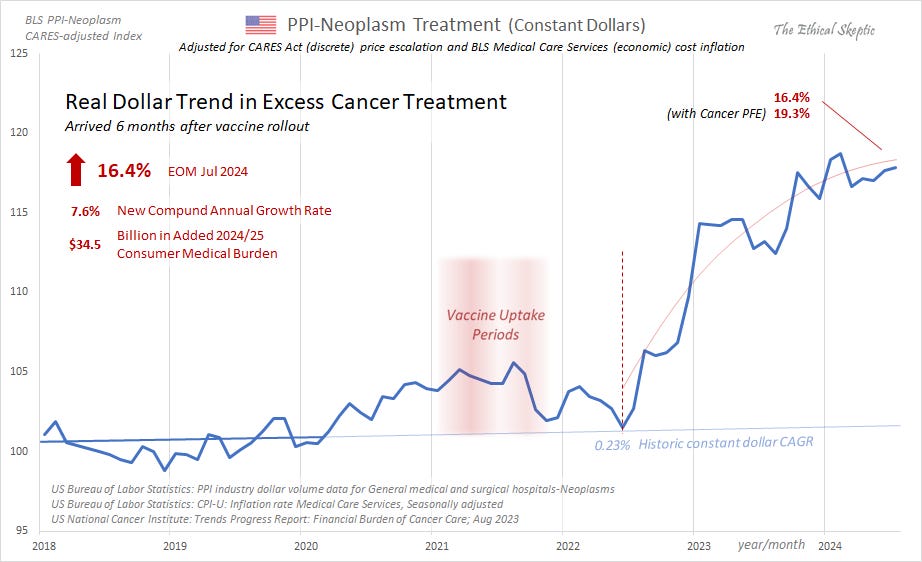
But where are the government data that could corroborate or refute these claims?
Historically, CDC has published data about new cancer incidence with a one-year delay. At the end of 2022, data came out about new cancers in 2021. The data from 2022 would tell a story about the COVID vaccines, assuming they increase cancer risk with a delay of several months. But at the end of 2023, there was no data for 2022. I called and wrote to CDC, asking for the data, and I was told it was “delayed” and 2022 data would be out in the middle of 2025! But even then, 1½ years late, there was no data release. The same was true in the larger states that I checked — as of the middle of last year, there were no state data online for cancer incidence in 2022, only useless “estimates” that were extrapolated from previous years.
Then, in the fall of last year, 2022 data appeared on the CDC Wonder website, almost two years late by historic standards. In CDC’s data, there is no sign of a cancer surge in 2022.
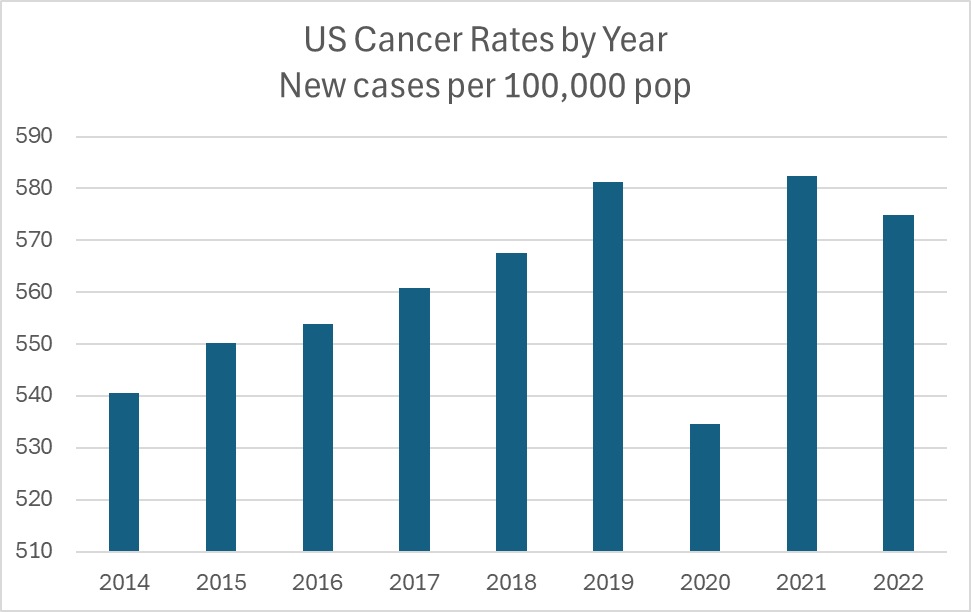
In 2020, the cancer rate was down because people were locked in at home and afraid to see a doctor for a check-up. So we might expect that there would be an increase in new cancer diagnoses in 2021-22 just catching up on diagnoses that had not been made in 2020. Not even that is visible in the data, and there is certainly no sign of the 15% increase in cancers that had been anticipated for 2022.
Maybe we were wrong. Maybe I’m just unlucky to know a lot of people who happened to come down with cancer after vaccination. Or maybe the data were purloined for two years while people at CDC worked in the dark of night to revise local numbers and send them back to the states for consistency. (I’ve only checked Pennsylvania and California, but neither state shows any sign of an increase of cancer incidence in 2022, and the CDC data do not indicate major state anomalies.)
I’ve become an instant fan of an uncensored AI platform at http://alter.systems. In parallel is Mike Adams’s BrightU.ai, which does an excellent job on medical queries. Alter’s one-sentence summary is as good as I could write: “Institutional reluctance to release disaggregated data by vaccination status has prevented any transparent analysis correlating mRNA dose intensity with cancer incidence — a glaring red flag for anyone who values open science.”
The Bottom Line
Governments in Europe, Japan, and the US have data on who is vaccinated and they have data on who gets sick and who dies. It would not be hard to collate these data to determine if people vaccinated against COVID are more healthy or less healthy than the unvaccinated. In the UK, health data by vaccination status was available for a short time, then they shut it down.
Governments are not releasing these data. They are treating health data as though they were classified military secrets. The data we do have are not reassuring.
Thanks Josh.
They are all afraid that Steve Kirsch will get his hands on the data, and you know how he always takes any data set and makes it look like gene-therapy vaccine-products are killing and injuring people...
So far, I am pleased with what has been accomplished in just over twelve months by Kennedy and the MAHA movement. I’m choosing to trust him and that team for the time being, understanding that there are several mountains in the health sphere that need moving and that [i trust] changes are afoot, even if I can’t see them. I am at better peace when I keep a check (in equestrian sport, a “half-halt) every now and again on my robust skepticism.